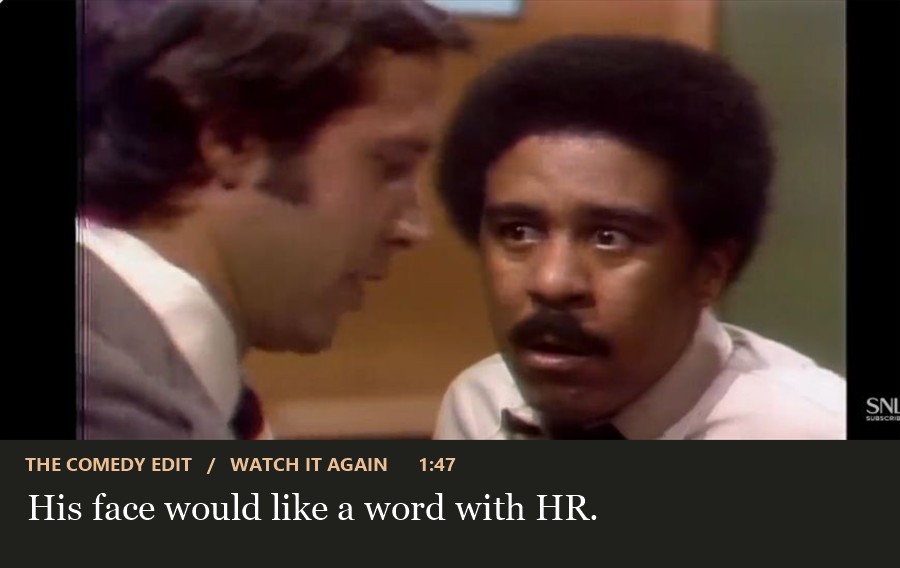
Richard Pryor’s Job Interview Turns on Who Gets to Ask the Questions
Ever needed a job right up until the interview? The caption on our Reel imagines Richard Pryor’s face asking for a word with HR. In the longer sketch, his character gets a chance to put that objection into words. All he does at first is ask the interviewer to repeat himself.
Keep that question in mind through the ending. Pryor’s character is applying for a janitor’s job. By the time they’re done, the man hiring him has offered to do the cleaning himself. Somewhere in between, a word game has gone spectacularly wrong for the man who suggested it.
In “Word Association,” Chevy Chase plays the interviewer and Pryor plays Mr. Wilson, the applicant. The sketch appeared in the December 13, 1975, episode of Saturday Night Live hosted by Pryor. The exchange includes anti-Black racial slurs. You can follow how the scene works here without hearing them. Episode listing
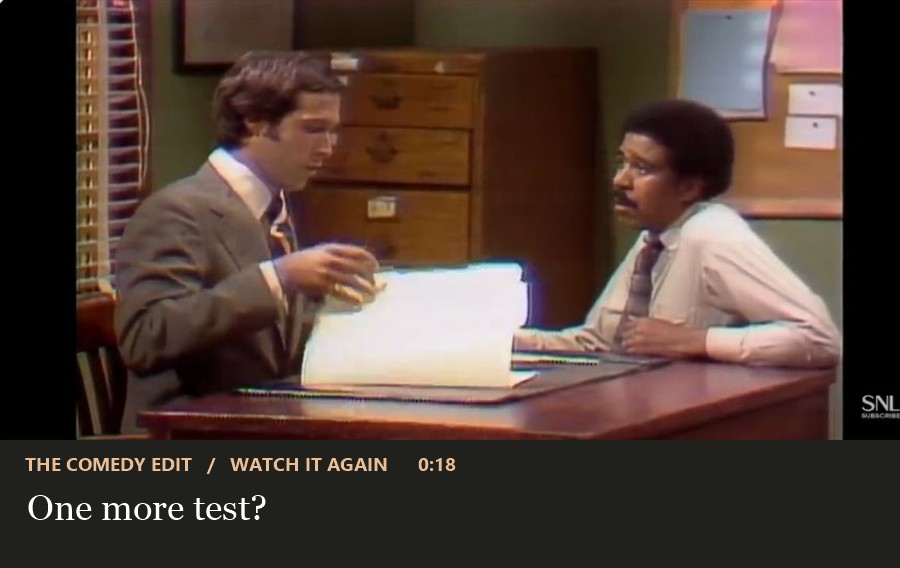
The practice round already tells you something about the boss
The interviewer says Wilson’s paperwork is in order. He thinks Wilson can do the job. Then he adds one last test. If you’ve ever had someone wave you through a process and then call you back for one more form, you know how neatly those two statements can coexist.
The boss demonstrates the exercise with “dog.” Wilson answers “tree.” Then the actual test begins. The boss uses the very same word, and Wilson gives the very same answer. That little duplication is easy to overlook once you know what comes later. It’s also an economical joke about office procedure. They’ve just done the thing, but apparently it only counts when the boss is ready to count it. Sketch transcript
Try predicting the next kind of reply instead of the next word. A few exchanges in, you expect Wilson to give a short answer and the boss to move on. The sketch has taught you a rule you can hear somebody break.
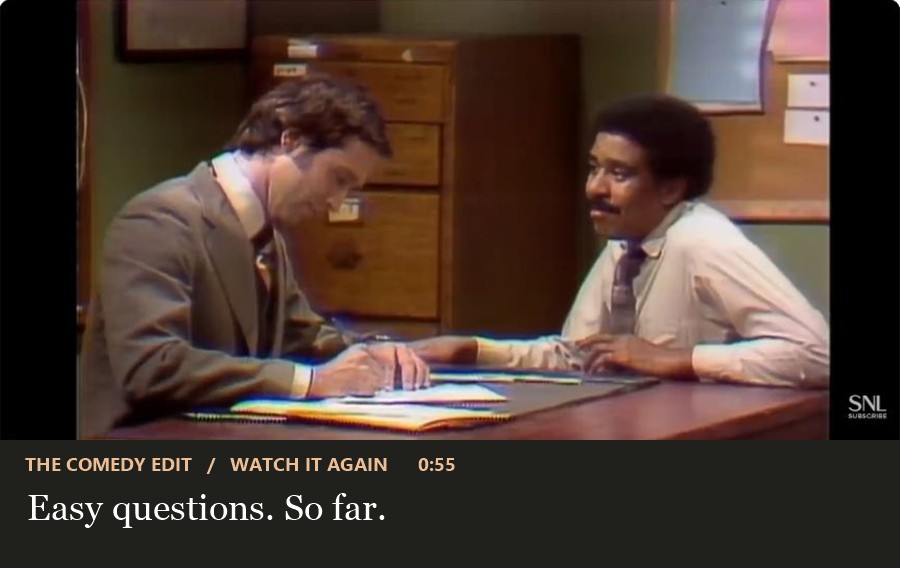
Listen for the first question going the other way
My pick for the turn is Wilson asking the interviewer to repeat himself. Up to this point, Wilson’s assignment has been to supply whatever comes to mind. Now he wants the man across the desk to account for what just came out of his mouth. For one exchange, the interviewer has to answer the applicant.
There’s a particular discomfort in what follows. The interviewer gets another chance to choose his words and repeats the racist insult. That choice makes his responsibility easier to hear. He picked the exercise, controls the hiring decision and can end the test whenever he likes. Wilson has to decide how to answer a man who can still deny him a paycheck.
Imagine reading the same exchange with the speakers labeled simply A and B. You’d hear two people escalating. Put their job titles back and the scene changes. Only one of those people had the power to make the other sit for this test. That difference gives Pryor’s question its bite.
Watch who starts doing the bargaining
When the interviewer turns to money, listen for a number from Wilson. The boss makes an offer, gets an angry reply, and raises the offer. Then he raises it again. Wilson hasn’t named a price. The interviewer has managed to place himself on both sides of a salary negotiation.
Here’s a smaller, original example from The Comedy Edit. Picture two siblings at the kitchen table with one slice of pie left. “I’ll wash two plates for that slice,” one says. The other raises a hand to speak. “Fine. The whole sink.” What the sibling was going to say was, “I saved it for you.”
The family example isolates one comic device. An offer gets funnier each time the bidder improves it without being asked. In the sketch, there’s a harder reason for the bargaining. The boss has to live with what he’s said, and money is one of the few things left on his desk that he knows how to offer.
Stay for the housekeeping
Wilson’s practical question about when he should start gives the scene another gear. A man has come in looking for work and, after all that, he’s prepared to get on with it. It’s the interviewer who can’t face an ordinary first day. He offers to take care of the cleanup.
On a second watch, follow just three decisions. Who introduces the test? Who makes the interviewer repeat a word? Who volunteers to clean up? You can answer all three without repeating a slur or guessing how anyone in the audience felt. By the time the man hiring a janitor volunteers for janitorial duty, the sketch has paid off a detail it planted in the job description itself.
Watch the sketch on YouTube ·
Watch the source
Video belongs to its uploader. Availability and access requirements may change.
YOUR TAKE
Which detail most changed how you read the interview?
Pick the answer closest to your point of view.
Thanks for sharing your take. There is more than one way to enjoy a good story.
Your choice stays on this browser. No public vote count is collected.