
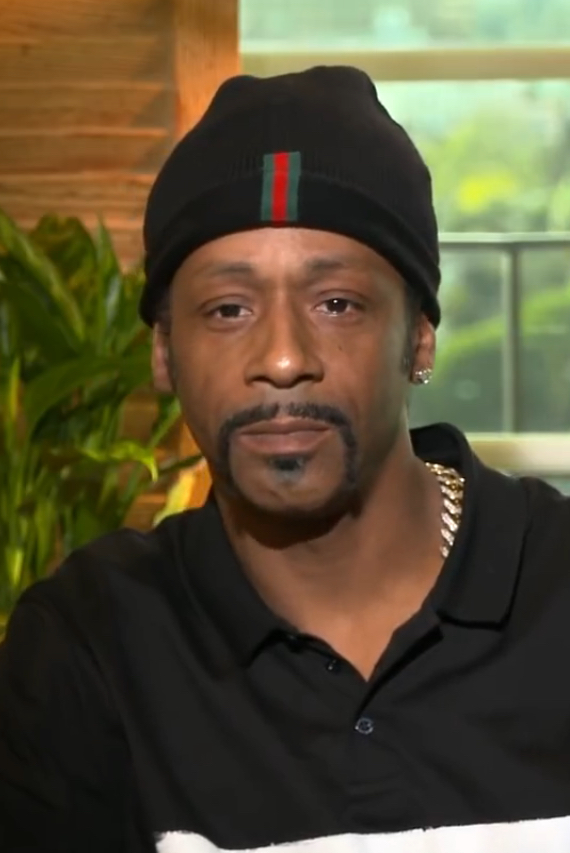
A short Katt Williams clip can leave you with two different questions: where did that moment come from, and what should I watch next? They deserve different answers. This guide gives you a small, clearly labeled set of starting points and a method for exploring them without pretending every circulating clip has already been identified.
The short version
Choose a full program by its year and context, not just a viral caption.
Our selection covers three Netflix titles, not a complete filmography.
Save a title to your watchlist; the viewing links open the official provider.
Three starting points, three different contexts
Netflix lists Great America as a 2018 special, World War III as a 2022 special, and Woke Foke as a 2024 special. Those dates are useful anchors when you encounter an excerpt with no source attached. They do not, by themselves, identify a clip. [1–3]
For a chronological sample, follow those three titles in that order. For the context of a recorded live-stream event, begin with the Woke Foke companion. This is an editorial route through a selection, not a ranking of the best performances or a claim that every earlier title is available from the same provider.
Start with a passage you can identify
For a close reading before a full program, begin with the official Great America excerpt about fake news. That guide follows an analogy becoming a traffic stop. Next, our World War III article follows a product-shortage claim becoming a literal comparison of an animal’s parts. The first changes the setting; the second changes the frame of the argument. The Woke Foke guide serves a different purpose: it identifies the live event and explains what the program records establish. It is not a third scene-by-scene analysis.
Keep the program and the publication date together
An upload date tells you when someone posted a file. It may tell you very little about when the performance was recorded. A new caption, a compilation title, or a numbered ‘part’ should not become your source for a special’s name.
Use an official title page, then compare the venue information, introduction, credits, and surrounding material where available. If you cannot verify a match, keep the identification open. A confident guess can send you into the wrong performance and make later discussion harder to follow.
Make a small watchlist with a reason
Our Katt Williams hub lets you keep these titles on your browser. Before saving one, give yourself a reason: chronological comparison, live-event context, or a closer look at delivery. A short list with a purpose is more useful than a large collection of unexplained links.
Check the provider’s current availability, rating, and access requirements before watching, especially with a group. The links here lead to official pages; this journal does not host the performances. When you return, choose one detail to discuss rather than trying to summarize an entire set.
Make a comparison you can actually repeat
Choose one complete program and keep a small record with three fields: the situation being described, the attitude toward it, and the point where your expectation changed. This separates a subject you already like from a delivery choice you might enjoy in unfamiliar material.
For example, ‘an ordinary chore becomes a crisis’ describes a comic pattern; ‘a joke about shopping’ only names a topic. Those are original note-taking examples, not descriptions of a particular Williams passage. A useful comparison follows the pattern across two programs without pretending they contain identical scenes.
Keep this guide as your navigation page. Use the Great America companion for the distinction between release date and repost date, World War III for comic scale, and Woke Foke for the original live-event context. Each answers a different question. None is a substitute for checking the actual source of the clip in your feed.
Continue with Woke Foke: what the 2024 live special is, and where to start.
Funny Quiz
Correct answer: C. The situation, the speaker’s attitude, and the turn in expectation.
Those three observations describe construction and can be applied to both programs, rather than relying on repost metadata.


Join the conversation
What caught your attention? Share your take.
Comments
Loading comments…