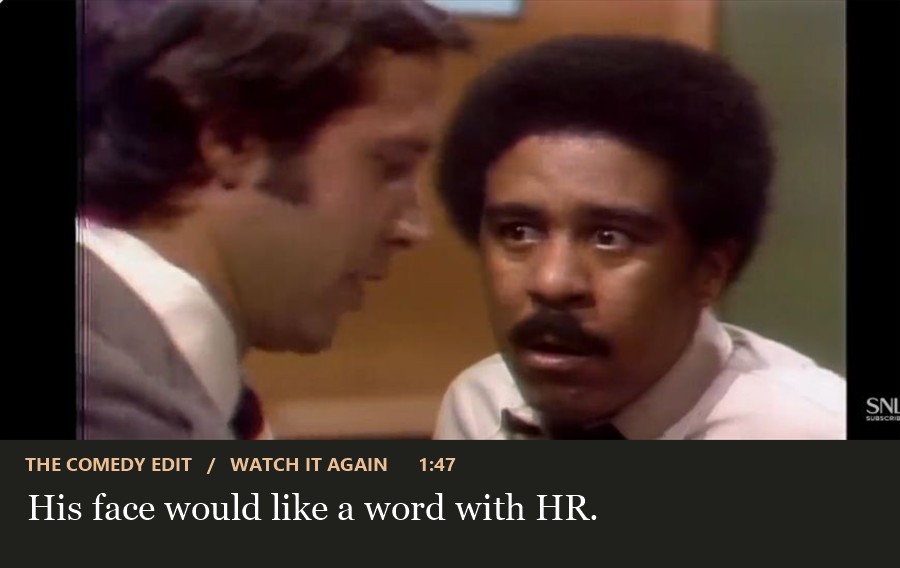
Richard Pryor’s Heartbreak Bit: Why Even Rudolph Isn’t Safe
WHEN EVERY SONG REMINDS YOU OF YOUR EX, CHRISTMAS IS IN TROUBLE.
A breakup song is supposed to hurt. A song about a reindeer should be a reasonably safe choice. That difference is the little trap inside Richard Pryor’s heartbreak routine.
The YouTube excerpt titled “When Men Get Their Hearts Broken” opens with the subject of men struggling after a relationship ends. For this rewatch, concentrate on the opening section, before the conversation moves into prison stories. There is a small, useful question to carry into it: what makes an unexpected example funnier than an obvious one?
The source film is Richard Pryor: Live on the Sunset Strip (1982), listed on Sony Pictures’ film page. This reading focuses on the wording and construction of the routine, rather than claims about individual expressions or precisely timed pauses.
Before watching: The excerpt contains strong language and adult material. Beyond its opening relationship section, it includes discussion of violence, prison, and sexual assault.
The first contrast: appearing fine versus being fine
Pryor begins with a broad comparison between men and women responding to heartbreak. His male character suppresses the hurt, but the situation becomes wildly exaggerated: emotional distraction grows into an inability to notice an enormous physical danger.
Read as a comic premise, the contrast is between an outward claim of control and evidence that contradicts it. The interesting question is not whether every man handles breakups this way. It is how a storyteller makes an invisible feeling visible.
Try that distinction on any comedy about embarrassment. “I was embarrassed” supplies information. A concrete consequence gives you something to imagine. When a scene works, you can often remove the emotional label and still recognize the feeling through what happens.
Why the song choice matters
Later in the opening, music becomes impossible to escape because it brings back the former partner. That is an understandable setup. It invites us to supply an equally understandable example: perhaps a love song, a wedding song, or something associated with a shared trip.
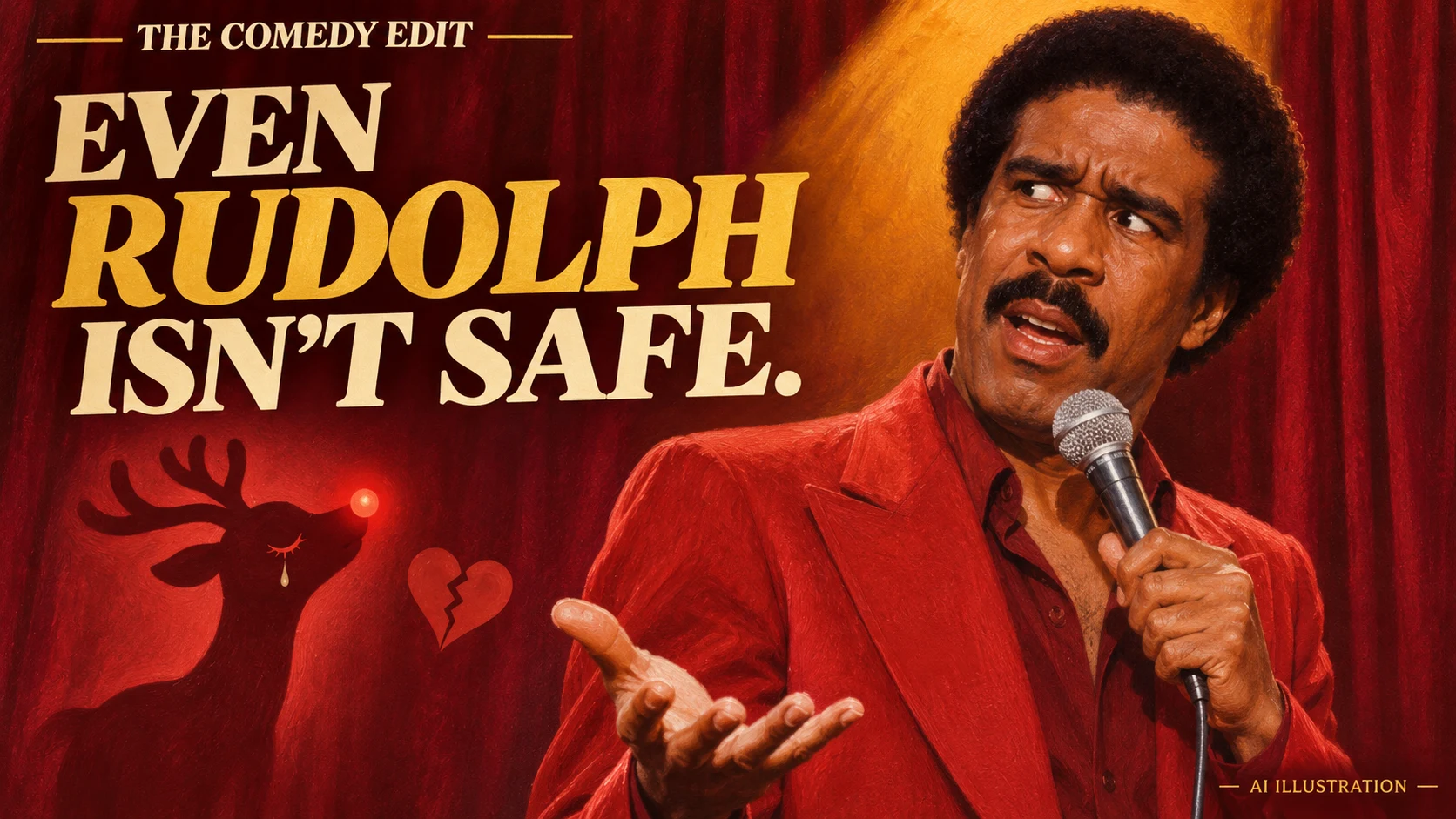
Instead, the reference is “Rudolph the Red-Nosed Reindeer.” The routine supplies a ridiculous physical connection to the absent woman. The song is familiar; its presence in a heartbreak story is not. The published transcript also records this sequence.
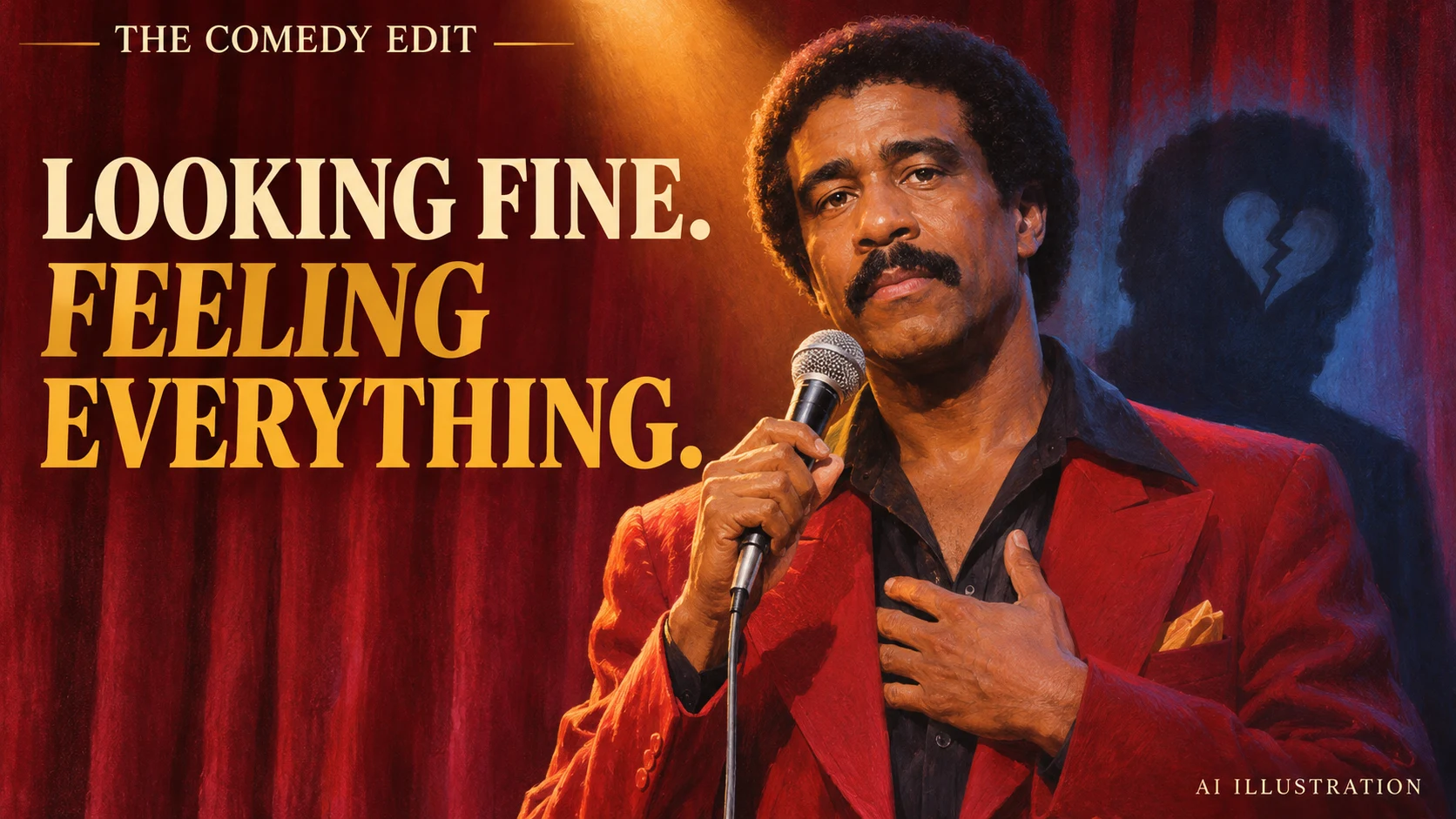
Our reading: the unlikely choice enlarges the problem. An ordinary romantic song would suggest that a particular memory still hurts. A Christmas novelty song suggests that the character can manufacture a reminder almost anywhere.
That is why specificity matters. “Everything reminds me of her” is an enormous claim with no picture attached. One carefully chosen example can make the claim feel larger than a whole list of predictable ones.
Watch the supplied excerpt: Richard Pryor — “When Men Get Their Hearts Broken,” uploaded by NOW COMEDY. This is an excerpt, not a link to the complete concert film.

A three-step rewatch you can actually use
You do not need to memorize comedy terminology. Try three short passes through the song setup, with a different question each time.
1. Name the expected answer
Before the example arrives, pause and name the kind of song you expect. Be specific about the category, rather than trying to guess the exact title. This makes your own expectation visible. Without that step, a surprising choice can feel merely random.
2. Find the connection
After the example, ask what ties it back to the subject. Surprise alone is not enough: an unrelated word could interrupt any sentence. The connection is what allows a listener to follow the leap and recognize why this strange detail belongs here.
3. Substitute something ordinary
Mentally replace the song with a conventional romantic ballad. Does the story still communicate sadness? Probably. Does it produce the same surprise? That comparison separates the information in a joke from the choice that makes the information funny.
This is a viewing exercise, not a test with one correct reaction. You may prefer the relatable premise to the absurd example. Either response becomes more interesting when you can identify what you responded to.
Keep the character separate from the rule
Relationship comedy often uses sweeping language. A useful critical habit is to ask whether you are hearing a dependable rule about people or the viewpoint of a comic character who has lost perspective.
For this routine, The Comedy Edit’s reading favors the second approach. You can recognize the embarrassment of trying to look unaffected without accepting a universal claim about either gender. You can also find an inventive comic construction inside material whose language you would not use yourself.
Those judgments can coexist. Enjoying a particular detail does not require endorsing every attitude around it, and disliking a line does not prevent you from explaining how it was built.
Take one question back to the clip
On your next watch, ask: what did I expect, and what replaced it?
It is a more useful starting point than simply calling a performer’s timing great. It gives you something concrete to notice, discuss, and compare with another routine. In this case, an apparently harmless musical choice becomes the place where the character’s attempt to keep heartbreak contained falls apart.
For information about the complete film and its listed digital editions, visit Sony Pictures’ official film page. Check the linked retailer for current availability and pricing.
Your take: what makes the song example work?
This is a preference question, not a knowledge quiz. Choose the explanation closest to your reaction.
Watch the source
Video belongs to its uploader. Availability and access requirements may change.
YOUR TAKE
You take: What makes the song example work?
Pick the answer closest to your point of view.
Thanks for sharing your take. There is more than one way to enjoy a good story.
Your choice stays on this browser. No public vote count is collected.